Fork
Original Fork
The original fork was made by Tange. It has chromed lower fork blades and the upper blades and crown match the blue of the frame. Its measurements are captured in dimensions. They are not repeated here to avoid discrepancies in the case of an update. The headtube diameter is 21.1mm, which is common to Schwinns and old school BMX bikes, but is otherwise rarely found on other bikes. The range of alternative stems that will fit the original fork is limited. I am looking for more rise than the original provides so I opted to move to a new fork. This presents some challenges.
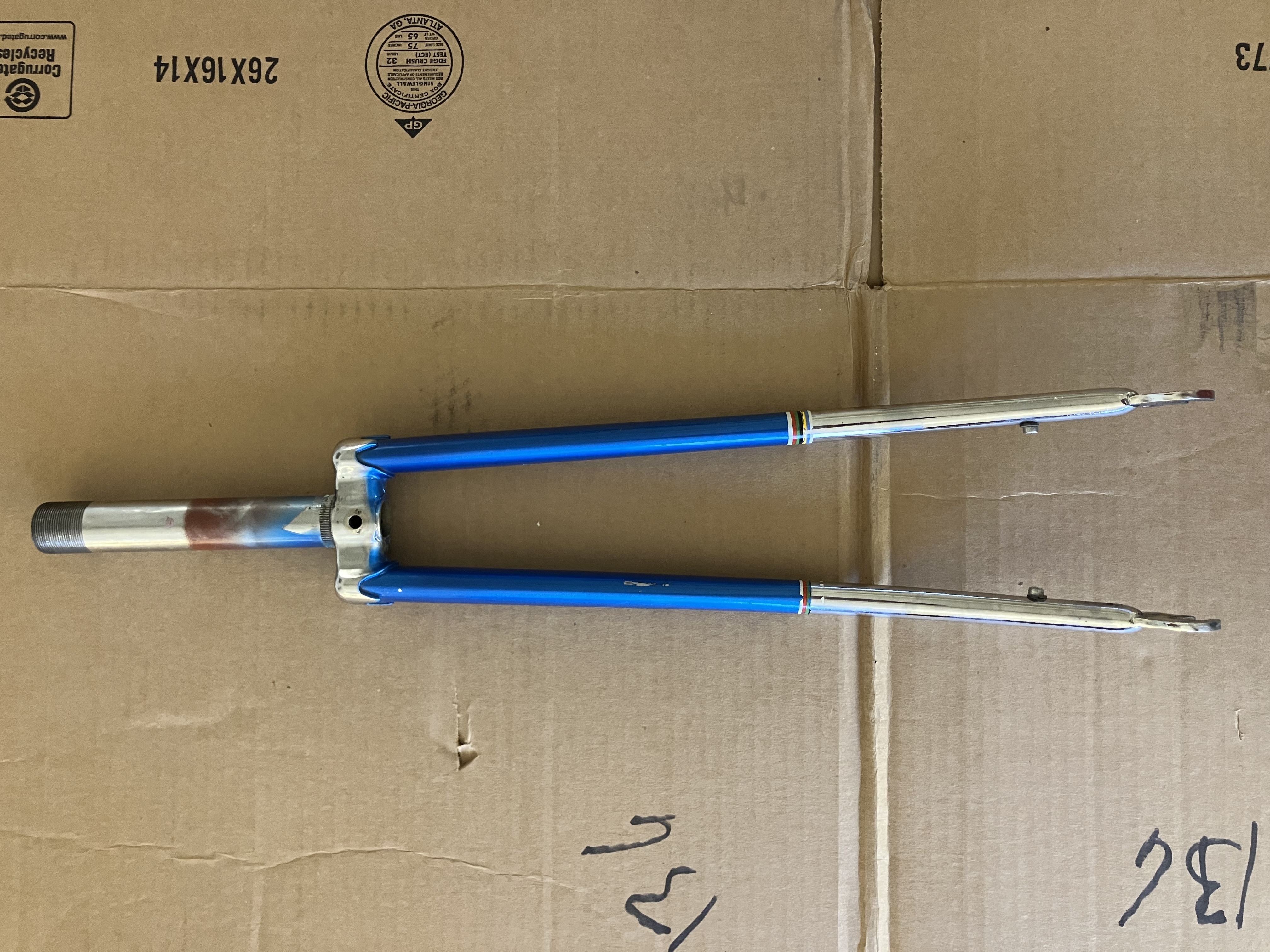
Figure 1: This is the original fork.
New Fork
There are few measurements to consider when replacing a threaded fork:
- Axle-crown: the distance between the fork dropouts and the top of the crown where the crown race sits.
- Steerer length: The distance from the top of the crown to the top of the steerer.
- Thread depth: How much of the steerer is threaded. In case you want to cut the steerer, you need enough threads remain to tighten the lock nut.
- Crown race seat: The original crown race seat is 26.4mm matching the ISO standard.
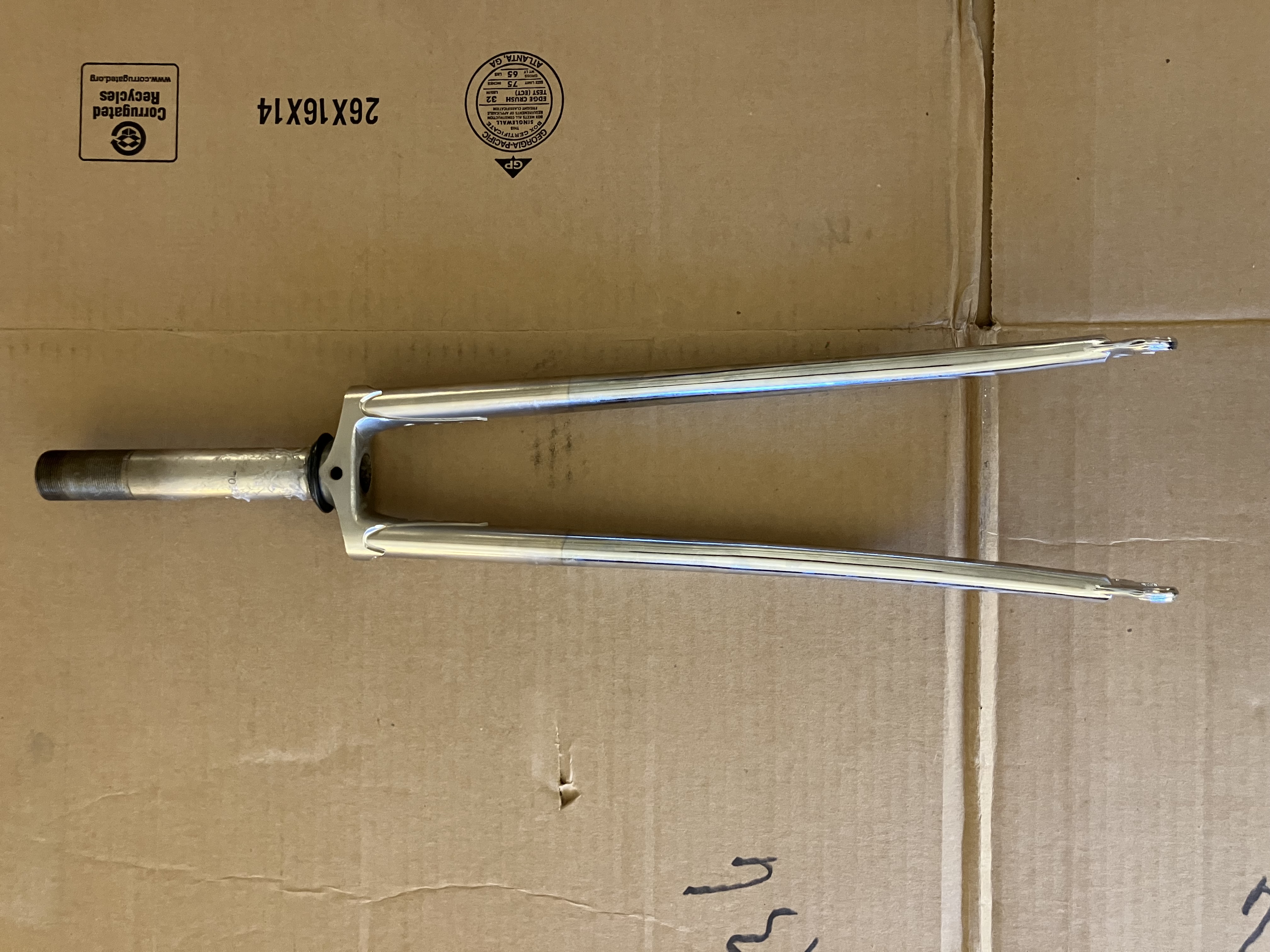
Figure 2: This is the replacement fork.
Axle-Crown
The axle-crown measurement drives the angle of the frame with respect to the ground. Increasing this length will raise the headtube higher, slackening the headtube angle, increasing the stack and decreasing the reach. Lowering has the opposite effect. I have not tried deviating from the stock length. During my search I was OK with going up to 10mm longer since increasing the stack was worth the risk of a negative change in handling, but I was only looking about 5mm shorter as I did not want lower the headtube much at all.
Steerer Length and Threads
The downside of threaded forks is that you really need one with exactly the right steerer length. Too long and you’ll have to cut too many of the threads. Too short and you can’t tighten the lock nut. If it’s a bit too long you can add spacers, if it’s a bit too short you can drop the centerpull brake hanger and run side pulls to regain 1.85mm of space. On a more standard bike, you could count on replacing the headset with another with a low stack height. Since headset options are limited, I’m not sure if there are lower stack options available. It’s a risk.
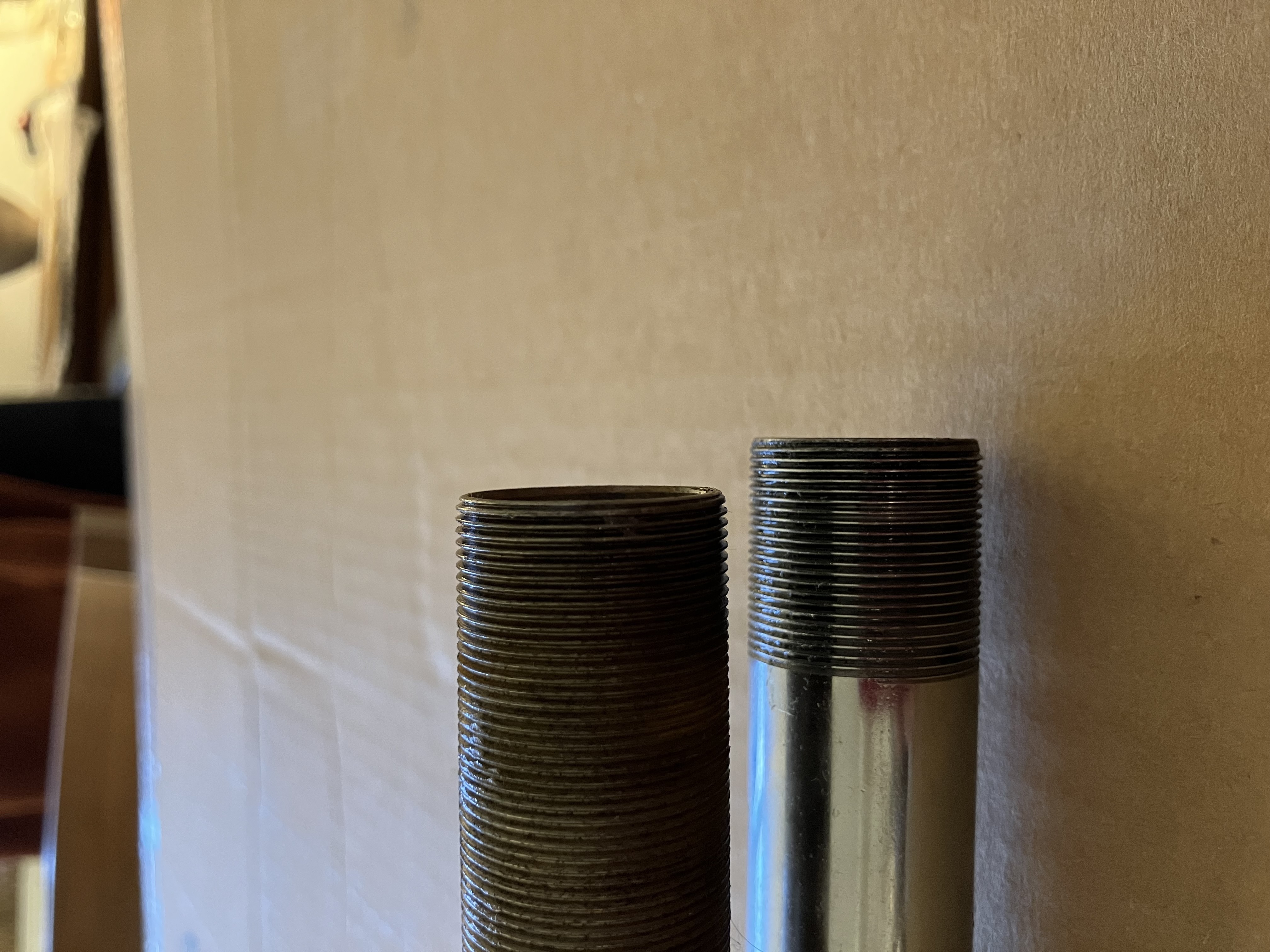
Figure 3: This new fork steerer is a little shorter despite measurements before buying. The original fork is on the bottom and the new fork is on top.
Crown Race Seat
Many of the candidate forks that appear on ebay are from Japanese bikes that use the 27.0mm JIS standard. There are four options here:
- Install a 27.0mm crown race and run loose ball bearings. The stock lower bearing retainer won’t like a non-stock crown race. This is what I’m doing and it doesn’t look great.
- Have a shop mill down the crown race seat from 27.0mm to 26.4mm. Then, swap the stock crown race over to the new fork. You’ll have to call around to find a shop that can do this.
- Install a new JIS headset using these adapter cups. Be sure that the stack of the new headset + the adapter cups suits your steerer length.
- Install the Porkchop BMX Neco Headset. This includes 26.4 and 27.0 crown races.
Threadless
You can avoid a lot of the complications involved with threaded forks by using a 1-1/8“ threadless adapter headset. This allows you to use a modern 1-1/8“ threadless fork, such as from a Surly Cross Check. I’m partial to the look of quill stems, but otherwise this appears to be a good option.
Headset Lock nut
You can re-use the stock headset so long as you replace the headset lock nut with one from a standard threaded headset. This will allow you to fit the larger 22.2mm stem diameter. Find one on ebay, ask at a local bike shop, or head to a nearby bike coop if you have one.