Stems
It can be difficult to determine the true rise and reach of a stem just by looking at its description. This value depends on the difference between the stem angle and the head tube angle. This table shows the effective rise and reach for a few stems.
The distances that I use align with the center of the clamp, not the far extreme. As you can see in the diagram below, the A measurement is the distance from the minimum insertion mark to the point where the quill intersects with a line drawn from the center of the handlebar clamp along the stem’s extension. Similarly, the B measurement is of the extension from the center of the clamp to the intersection with the center of the quill.
| Measurement | Min insertion-top center (A) [mm] | Reach (B) [mm] | Stem angle [deg] | Headtube angle [deg] | Effective Rise [mm] | Effective Reach [mm] | Weight [g] |
|---|---|---|---|---|---|---|---|
| Stock | 72 | 95 | 73 | 72 | 70 | 72 | |
| Kalin | 60 | 100 | 135 | 72 | 146 | 26 | 392 |
| Nitto Technomic | 160 | 100 | 73 | 72 | 153 | 50 | 364 |
| Nitto Dirt Drop | 155 | 100 | 125 | 72 | 227 | 12 | 375 |
| Nitto Faceplater 110 | 160 | 110 | 100 | 72 | 203 | 47 | |
| Nitto Faceplater 135 | 160 | 135 | 100 | 72 | 215 | 69 | |
| Nitto 90-190 85 | 125 | 85 | 90 | 72 | 145 | 42 | 414 |
| Nitto 90-190 110 | 125 | 110 | 90 | 72 | 145 | 42 | 414 |
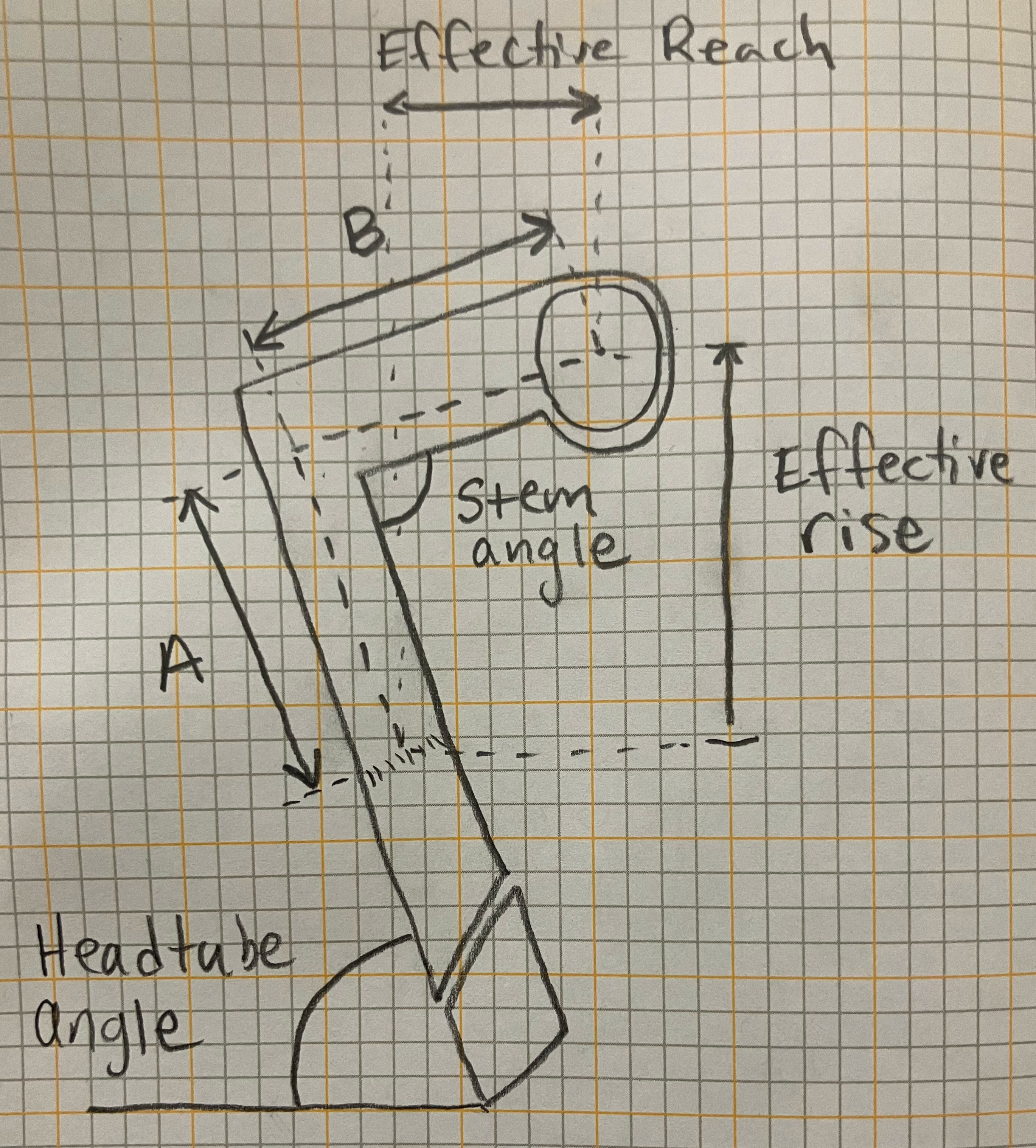
Figure 1: This diagram shows the measurements and results of the table above.
Computing Effective Lengths
This equation represents the effective rise:
\begin{equation} Rise_{effective} = Asin(\theta_{headtube})+Bsin(\theta_{stem}-\theta_{headtube}) \end{equation}This equation represents the effective reach:
\begin{equation} Reach_{effective} = Bcos(\theta_{stem}-\theta_{headtube})-Acos(\theta_{headtube}) \end{equation}